



ABDULLAH M. I. SYED

About
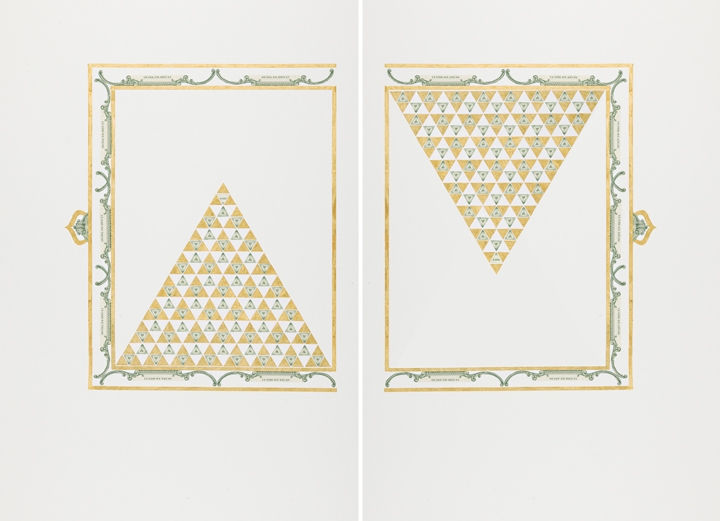
Abdullah M. I. Syed (b. 1974, Karachi) is a transnational contemporary artist and designer whose multidisciplinary practice navigates the porous boundaries between art, religion, economy and geopolitics. Working between Sydney, Karachi and New York, Syed synthesizes eastern and western visual vocabularies into work that is at once formally rigorous and conceptually provocative. Trained across diverse disciplines, his output encompasses sculpture, video installation, drawing, performance and text-based projects—each strategy deployed to interrogate how histories, faiths and market forces shape cultural meaning. Syed’s academic formation underpins the intellectual breadth of his practice. He holds a PhD in Art, Media and Design (2015) and an MFA (2009) from the University of New South Wales, Sydney, complementing earlier degrees (BA in Design, MA in Education) from the University of Central Oklahoma. This hybrid education—combining studio skill, research methodologies and pedagogic experience—enables Syed to operate fluently as artist, writer and educator. His research-driven approach surfaces in work that often reads as a staged argument: archival fragments, manufactured artifacts and sculptural objects are mobilized to produce speculative narratives that destabilize received histories. Formally, Syed is interested in how material signifiers—objects, texts, and visual tropes—mediate belief and value. His installations layer manufactured surfaces with found and fabricated components, materializing systems of exchange (religious, economic, cultural) as tangible topographies. Performance and video extend these concerns temporally: live enactment and recorded testimony become modes for re‑staging contested meanings, inviting audiences to witness processes of translation and transformation. Across different mediums, Syed’s work privileges ambiguity and critical distance, refusing easy moralizing while foregrounding ethical complexity. Syed has exhibited and performed widely across institutional and biennial contexts. Highlights include participation in Asia TOPA (Asia Triennial of Performing Arts), Melbourne (2017); exhibitions and projects at 4A Centre for Contemporary Asian Art and Casula Powerhouse in Sydney; presentations at Art Central, Hong Kong; and exhibitions at Pataka Museum, Porirua (New Zealand). He has also engaged with venues in North America and South Asia, reflecting a practice that is both locally grounded and globally conversant. His work is held in public and private collections including the Devi Art Foundation (India), Rangoonwala Foundation and AAN Collection (Pakistan), Blacktown Arts Centre and Casula Powerhouse (Australia), the University of Central Oklahoma and the U.S. State Department’s Art in Embassies programme (Islamabad). These institutional acquisitions attest to the cross‑cultural relevance and durability of his art. Syed’s career is punctuated by significant residencies and recognitions: Parramatta Artists Studios (2013–15), Fairfield City Museum and Gallery residency (2015–16), and print residencies at Cicada Press (2009, 2013). Awards include the Blacktown Art Prize (2010), the UNSW Postgraduate Research Scholarship (2009) and the IAO Installation Art Award (2003); he has been shortlisted or commended for the Woollahra Small Sculpture Prize, Hazlehurst Prize, Moran Photography Prize and Blake Prize. A founding member of Eleven, a collective of contemporary Muslim Australian artists, curators and writers, Syed is committed to collaborative discourse and cultural advocacy. As educator and practitioner, he foregrounds pedagogy as a form of public practice—mentoring younger artists while staging works that ask difficult questions about belonging, representation and the economics of culture. Dr. Abdullah M. I. Syed’s art is defined by intellectual curiosity and material inventiveness. By weaving real and fictional narratives across hemispheres, he constructs visual arguments that challenge received certainties: his work asks viewers to reconsider how objects, images and institutions produce truth, authority and community in an unsettled global present.